I spot inflection points early and then have the poor judgement to act on them - sometimes as a venture, sometimes as a book.
For two decades I helped the world's larger companies see change coming - most recently as a VP at Frost & Sullivan, where the official title was about growth strategy and the actual job was pattern recognition. Harvard Business School gave me the vocabulary; a couple of decades across sectors gave me the pattern library. Now I put both to work building ventures at the frontier and writing books for the everyday.
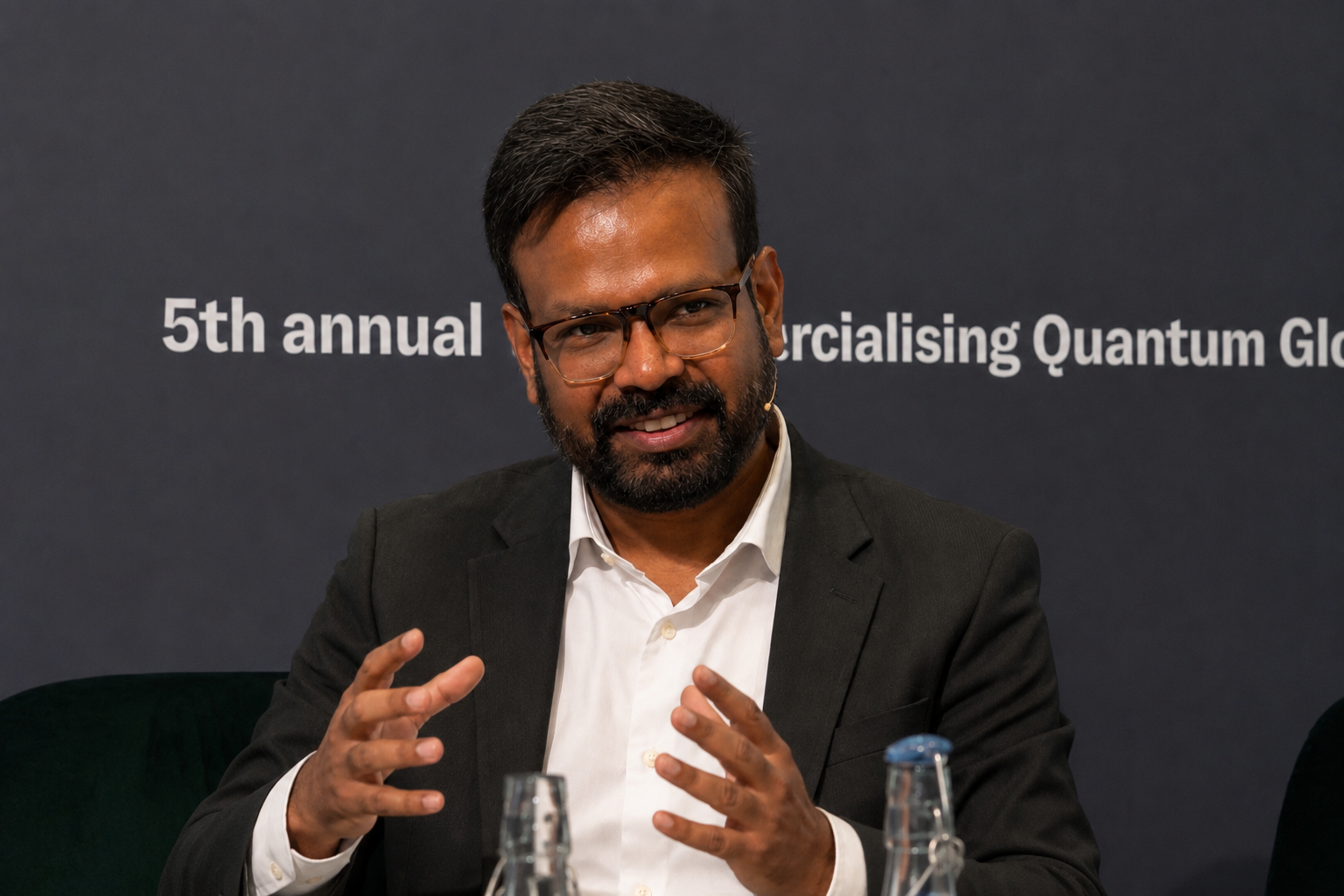
Futurist
The official job for twenty years - most recently as VP at Frost & Sullivan - was spotting inflection points before the market conceded they existed. Not prediction as prophecy. Pattern recognition as a professional discipline, pressure-tested across sectors and paid for by clients who couldn't afford to be wrong.
Frontiersman
I don't work in adjacencies. Compute, energy, space, flight - the ventures I co-found sit where the map runs out and the textbooks haven't been written yet. Frontier is not a marketing word here; it's the operating environment.
Founder
Five ventures across four frontiers - Vajra Vault, quaStrat, H2 Fuel, Space Factories, PushpakTwo. Each one started as a question I couldn't put down: why must hydrogen stay expensive? why must a flying machine have wings? Founding, for me, is what happens when a question refuses to stay theoretical.
Fosterer
Author of five published books with five more in the press; essayist; mentor; occasional food writer. The fostering bit is where the EQ shows up - the work of tending to people, ideas, and cultures rather than just to companies. High IQ without high EQ is just a very fast argument. This is the counterweight.
There's a claim I'm slightly embarrassed to make, so I'll let the numbers make it instead. Analytical intelligence and emotional intelligence - IQ and EQ - turn out to be only weakly correlated; the research puts it at roughly 0.2 to 0.3. In plain terms: being sharp and being genuinely good with people don't reliably come together. Add builds deep-tech and writes about Odia food and staying calm to the same résumé, and you're not describing a category anymore, you're describing an outlier.
I don't say this to sound impressive. I say it because it's the honest explanation for a CV that looks like it belongs to four different people. The polymath thing isn't a flex - it's just what happens when you refuse to pick a lane and are stubborn enough to get good at several.
If you want the honest organising principle behind all of it - the ventures, the books, the essays - it isn't strategy or technology or writing. It's that I am, and have always been, a collector of interesting questions.
We live in the first era where answers are effectively free. Ask anything; a machine will oblige in seconds, usually correctly, occasionally with confidence it hasn't earned. Answers have been commoditised. And precisely because of that, the scarce and valuable thing has quietly flipped. It was never the answer. It was the question - the strange, well-shaped, slightly unreasonable question that nobody thought to ask, or was too sensible to.
Questions are the true colour of human creativity and curiosity. An answer closes a door, tidily; a good question opens a corridor of them. Every venture I've co-founded is a question wearing a business plan - why must hydrogen stay expensive? why must a flying machine have wings? why must critical biosynthetics be made down here? Every book is a question I couldn't stop turning over until it became a manuscript. I don't chase answers. I chase the questions worth having, and the answers turn out to be the souvenirs you pick up along the way.
So that's the collection. Not stamps. Not art. Questions - kept, polished, occasionally let loose on the world to see what they knock over.
Awards, kindly given.
A few markers along the way - for the strategy work, the deep-tech ventures, and, occasionally, the writing.
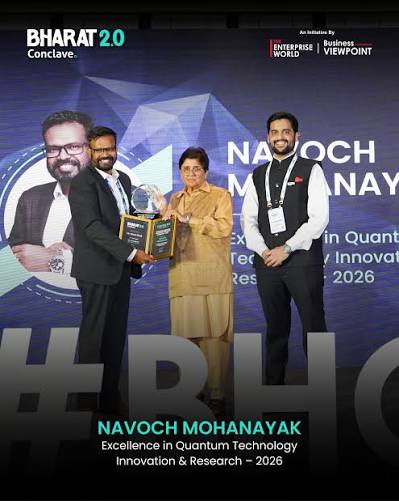
Excellence in Quantum Technology Innovation & Research - 2026
Bharat 2.0 Conclave - recognising work at the intersection of quantum decision infrastructure and applied strategy.
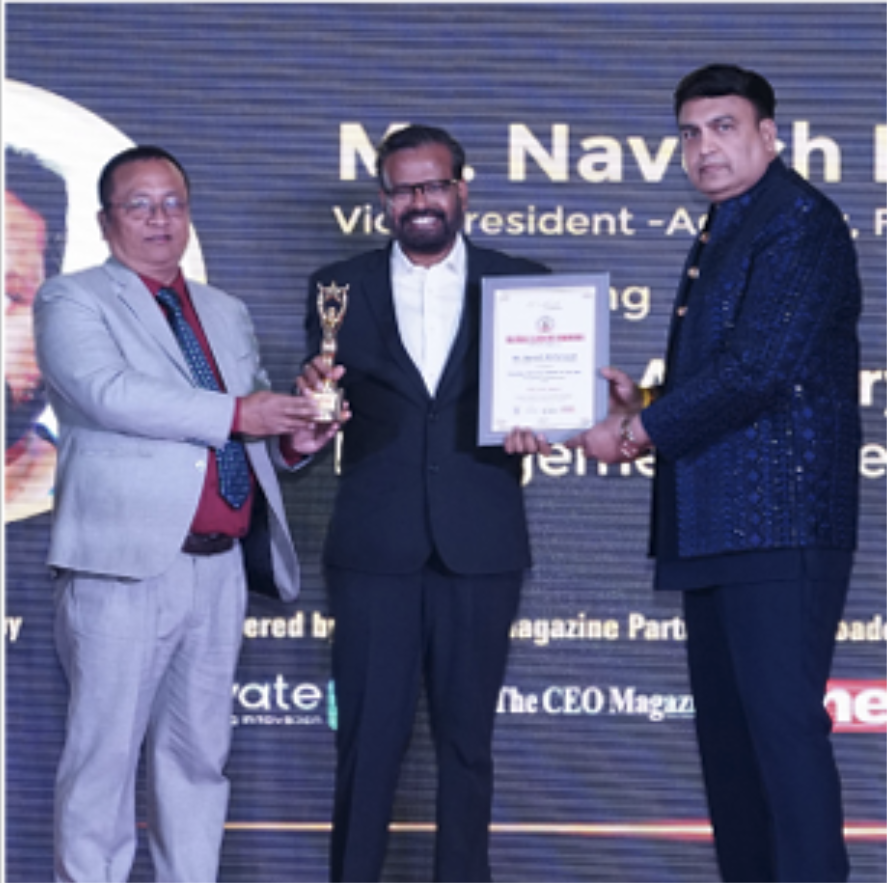
Strategy Advisory Leader of the Year
The CEO Magazine - for two decades of advisory work helping large enterprises see change coming, and act on it.
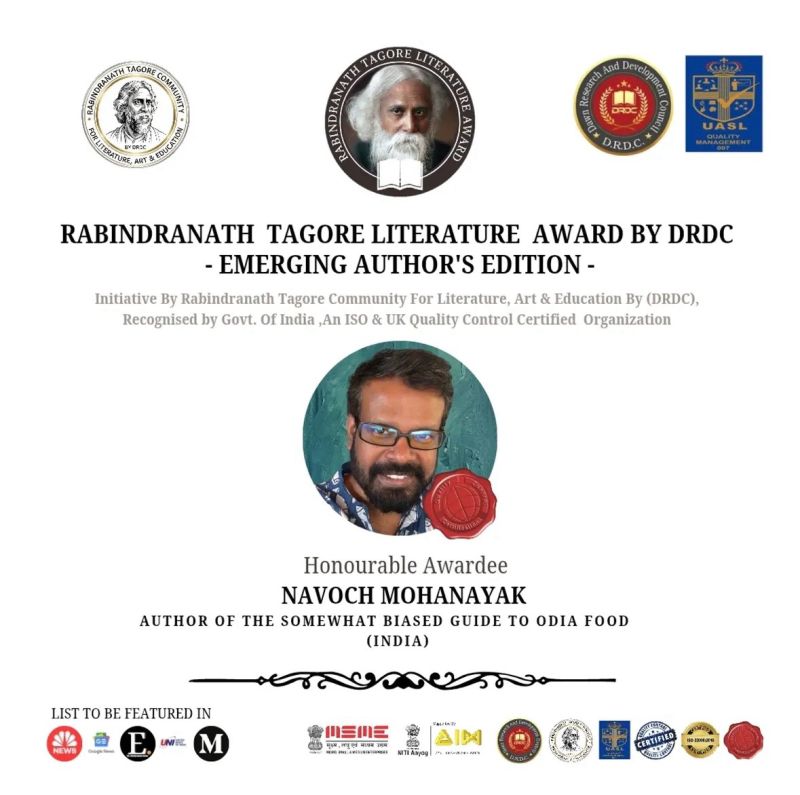
Rabindranath Tagore Literature Award - Emerging Author's Edition
DRDC & Rabindranath Tagore Community for Literature, Art & Education - for The Somewhat Biased Guide to Odia Food.
Every collector of questions started as a reader who wouldn't put the book down. Mine were the ones that treated wonder as a serious business and the universe as an invitation rather than a syllabus. If you want to understand how my head is wired, this shelf explains more than my CV does.
All About the Telescope
the book that made the night sky feel like something you could reach, not just admire. Curiosity with a lens on it.
Barankyn's Fantasy World
proof, early and permanent, that an entire universe can be smuggled in through the imagination of one stubborn child.
The Feluda adventures - Satyajit Ray
deduction as an art form, and the quiet lesson that the sharpest mind in the room is often also the kindest. High IQ, high EQ, decades before I had names for either.
Treasure Island - Robert Louis Stevenson
the original argument that a map, a question, and enough nerve are all an adventure ever really needs.
Enid Blyton - the Wishing-Chair stories
the first books that taught me the ordinary and the magical share a border, and the border is more porous than adults let on.
Jules Verne
the patron saint of "but what if we actually could." Half my ventures are just Verne with a supply chain.
Arthur Conan Doyle
where I learned that observation is a discipline and the obvious is usually a disguise.
Isaac Asimov
who made the future feel like an engineering problem with a conscience, and quietly gave a generation permission to take big questions literally.
Notice the pattern. None of these gave me answers. Every one of them handed me a better question and pointed at the door.